

11 September 2026, Vardø Museum
The 2026 Border Seminar
Center for Geopolitics, Peace and Security, UiT The Arctic University of Norway
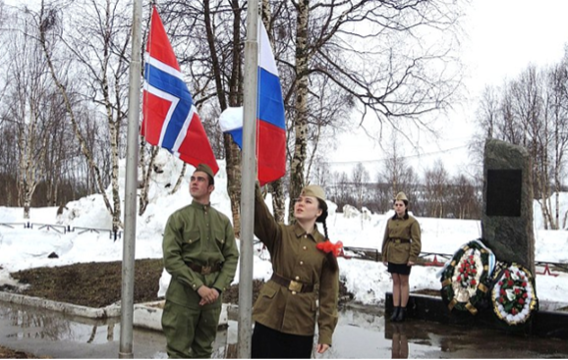
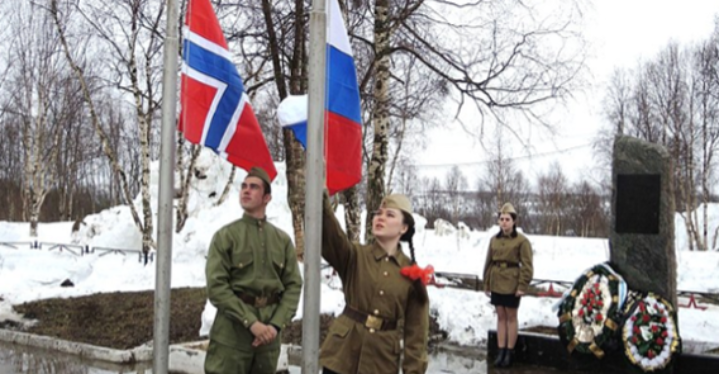
Commemoration Russian Victory Day in Lavna, Murmansk region, May 2017.
The 2026 UiT Border Seminar explores a central feature of Russia’s authoritarian turn under Putin: the increasing reliance of Russian state ideology on historical references, and the growing control and militarization of official historical narratives. In these processes, memory practices, rituals and narratives related to WWII hold a prominent position, forming a basis for the Russian state efforts to enforce consensus and collective identity while also forging strong enemy images and empowering neo-imperialist ideas. Today, memory policy functions as a key tool in consolidating the power of Russian authorities, both domestically and in foreign policy. The seminar compares and discusses the how and why in Kremlin memory policy towards the Nordic-Baltic countries.
History as weapon: Russian memory policy towards the Nordic-Baltic countries
11 September 2026, Vardø Museum:
18.00 Welcome and introduction. Inger Lene Nyttingnes, Vardø Museum, and Bjarge Schwenke Fors, GPS
18.05 Maria Smorževskihh-Smirnova, CEO Narva Museum: Shaping Minds, Projecting Power: Russia’s Information Influence and Hybrid Strategies in Narva, Estonia’s Border City
18.40 Patrik Oksanen, Strategic Advisor at Centre for Societal Security at Swedish Defense University: The Battlefield of History: Russian Weaponization of History in Finland
19.00 Kari Aga Myklebost, Professor of Russian History, UiT: Exporting Russian State Patriotism
19.15 Stian Bones, Professor of Modern History, UiT: Empowering Memories of Liberation
19.30 Panel discussion with Maria Smorževskihh-Smirnova, Patrik Oksanen, Kari Aga Myklebost and Stian Bones. Moderator: Bjarge Schwenke Fors
The 2026 Border Seminar is conducted in collaboration with the NORMEMO project, Memory Politics of the North 1993–2023 | UiT
About the speakers
Maria Smorževskihh-Smirnova (PhD) is the Director of the Narva Museum in Narva, Estonia’s eastern border city. As a historian and public intellectual, she has extensive experience working at the intersection of cultural heritage, identity, memory politics, and contemporary security challenges. Drawing on Narva’s unique position at the crossroads of different information spaces and historical narratives, her work explores the role of culture and public institutions in strengthening societal resilience and democratic values.
Patrik Oksanen is serving as a Strategic Advisor at Centre for Societal Security at Swedish Defense University, but is also associated with the think tank Stockholm Free World Forum. He is a former award-winning Journalist and the author of three books related to information influence and hybrid warfare. The latest is The last lie, which is about how a colonel in GRU in the mid-90´s created the start of all the conspiracy theories around the ferry disaster of M/S Estonia. Oksanen is a member of the Royal Swedish Academy of War Sciences and the Royal Swedish Society of Naval Sciences.
Stian Bones is a Professor of Modern History at UiT The Arctic University of Norway. His research focuses on security policy and international relations in the High North and the Arctic from the interwar period to the present day, including alliance politics and relations between great powers and small states. Bones has published extensively on topics such as the history of the Second World War in Northern Norway, Soviet/Russian subversion and influence operations, espionage, counterintelligence, and Norwegian polar policy.
Kari Aga Myklebost is Professor of Russian History at UiT The Arctic University of Norway. Her research focuses on the modern history of the High North, with particular emphasis on security aspects of state relations in the region. In recent years, she has worked on Russian political uses of history, Russian information operations, and other hybrid threat activities in the High North.